


Hiroshi Kira Interview
Lighting up the Japanese garden at night
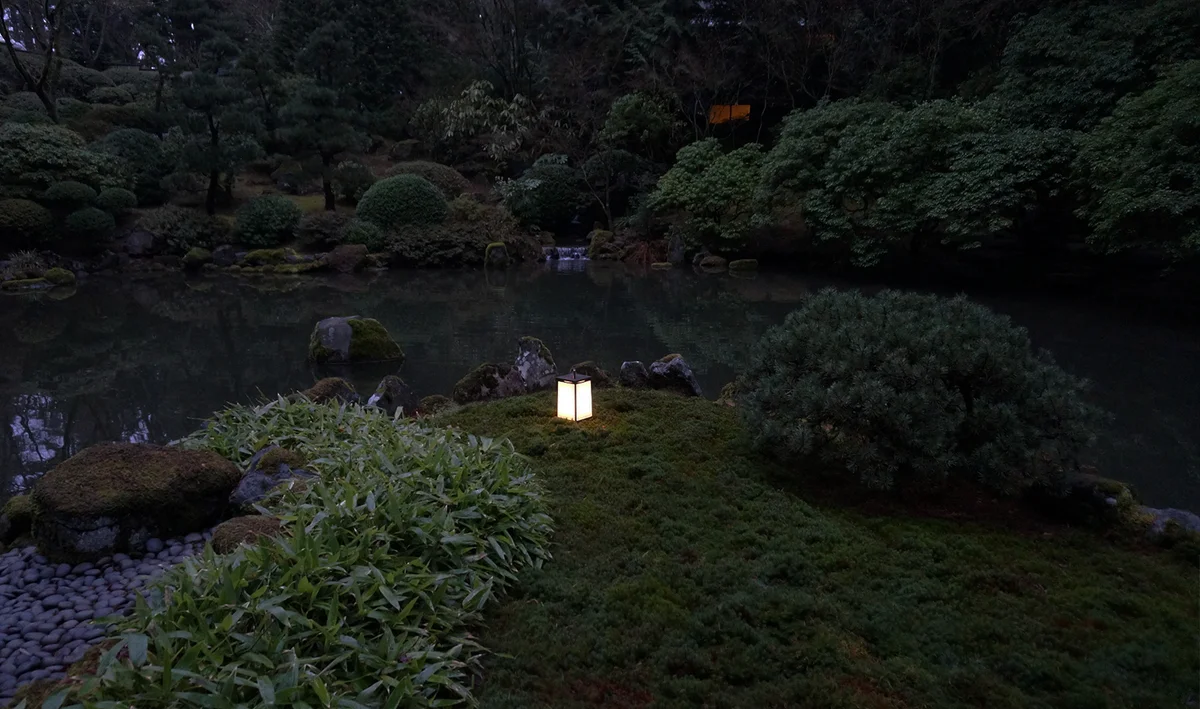
The North American Japanese Garden Association spoke with HK Lighting founder Hiroshi Kira about how a garden changes after sunset. These highlights follow his ideas from moonlight and shadow to the details of lighting a path.
What changes in a garden after dark?
Kira was interested in the way moonlight shifts what you notice. As it moves, one branch, stone, or surface comes forward and another falls into shadow. He used that gradual change as a model for lighting a garden gently.
How much light does a path need?
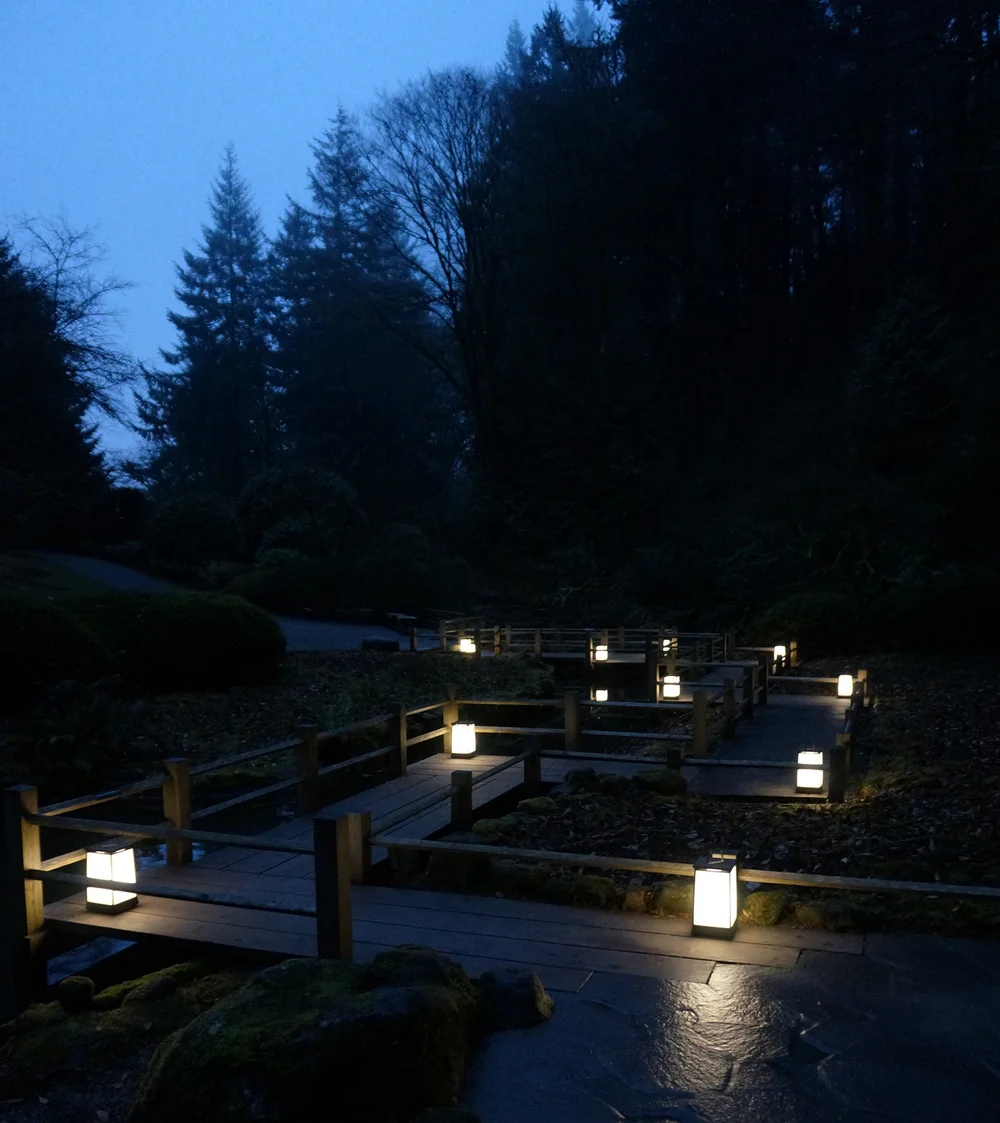
Kira wanted enough light to see the next step, with the fixture tucked out of view. Compact, adjustable fixtures let a designer choose exactly where the beam lands and keep glare away from the people using the garden.
“Light pathways just enough so you can see them safely.”
What did that look like in practice?
At the Portland Japanese Garden, Kira’s team looked to the traditional portable tea-garden lantern. They developed a removable light for summer events so visitors could find their way and the lanterns could be taken away afterward.
What can you bring home from that idea?
Start at the front walk and then look back from indoors. Pick the turns and steps people need to see, then find one detail worth noticing beyond the glass. Those two views give SmartTouch and the landscape team a place to begin.
Interview highlights prepared by SmartTouchUSA from the North American Japanese Garden Association interview republished by HK Lighting. Photography and logo courtesy of HK Lighting.